.jpg)
A Walk Through History: Following In Hamilton's Footsteps

Updated: Apr 28
On Saturday, April 18th, the streets of Manhattan didn’t just feel like pavement, they felt like a stage. I had the pleasure of leading a group of adventurous Tag Alongs on a first journey through the life, scandals, and legacy of the financial Founding Father himself, Alexander Hamilton.
Here is how our day in the 18th century unfolded:
The House on the Hill and the Hero in the Park

We began our morning at The Grange, Hamilton’s beloved country project in Harlem. Standing before his final home, built in 1802, one could imagine the Hamilton children playing in gardens that Eliza tended in those final years of Hamilton’s life. "It's quiet uptown..." is the exact sentiment of the area. The home was moved three times over the years, this final spot is nestled among much larger buildings at the top of a quaint park on the edge of The City College of New York.

From there, we swept down to City Hall Park. Under the watchful eye of the Nathan Hale statue, I handed out our Limited Commemorative Passes, the replica passes for our day of time travel. These passes were replicas of a pass someone would procure to move around New York City in 1776 when the British troops occupied Lower Manhattan.
As we stood there next to the lamp posts and modern benches by the current City Hall, I conjured the image of a young, fiery Alexander, then just a student, standing on this very ground to deliver impassioned speeches against British tyranny. Nearby, a modern demonstration was occurring adding to the atmosphere of chanting and shouting demands for representation in a government that seems to sometimes not listen to the people.
Waterfront Whispers and the Shadow of the Duel

Lunch was served at the historic South Street Seaport at Pier 17, framed by tall masted ships and the majestic Brooklyn Bridge. Between bites, we looked out at the water and reimagined the 1776 waterfront with a chaotic forest of masts, constant movement of stevedores, ship's captains, merchants, and the salty air of a revolution in the making. This was where Hamilton first arrived, a young teenage orphan ready to make his brilliant mark on the world no matter how long it took.

The mood shifted as we moved to the riverfront facing the smoggy horizon. With New Jersey looming in the distance like a ghost, I spoke of the Field of Honor and the impacts of duels. I recounted the tragic fall of Philip Hamilton and, eventually, the fatal meeting between Alexander and Aaron Burr on the cliffs of Weehawken, including the mirrored details of their untimely deaths. The breeze off the river felt a little chillier as we reckoned with the price of pride.
The Heartbeat of Wall Street

Turning onto Wall Street, we stopped about halfway up at 57 Wall, the site of Hamilton’s former home. Modern Wall is tight and winding, full of skyscrapers so tall the very sun is blocked all day. I asked everyone to rest their minds a beat and imagine those skyscrapers replaced with 18th-century townhomes, no higher than two or three stories. The sun shone into windows in those days. The streets were wider, muddier, louder with the carriages and people about. I asked them to picture:
The Scene: Hamilton, scratching away at the Federalist Papers into the wee hours of the night while the rest of the street and his household slept. Eliza sometimes by his side helping write some of his dictation down when he could no longer hold the quill because he was exhausted but couldn't stop. A genius at constant work.

The View: Hamilton stepping out his front door, glancing down the end of Wall at Trinity Church before walking a block or so to Federal Hall to work as Treasury Secretary in Washington’s cabinet. This painting is an imagined scene painted in 1913. It shows what Wall Street may have looked in 1790. Left to right is Eliza, Angelica, Little Philip, possibly Eliza & Angelica's mother, Hamilton, Philip Schuyler, and walking toward them is Aaron Burr and daughter Theodosia (Burr lived close by and at that time they were colleagues). Trinity Church is in the distance.

At Federal Hall, scaffolding hugged the statue of Washington these days, so we held court across the street. It was so narrow here there were more pedestrians in the street than cars. I recounted the Cabinet Battles where the intellectual wrestling matches between Hamilton’s financial plan dreams and Jefferson’s agrarian visions took precedent for a time. The very air grew cold whenever they were in the same room, it was said. And it all came to a head a few blocks over one June evening in 1790…
Scandals, Secrets, and (more) Scaffolding
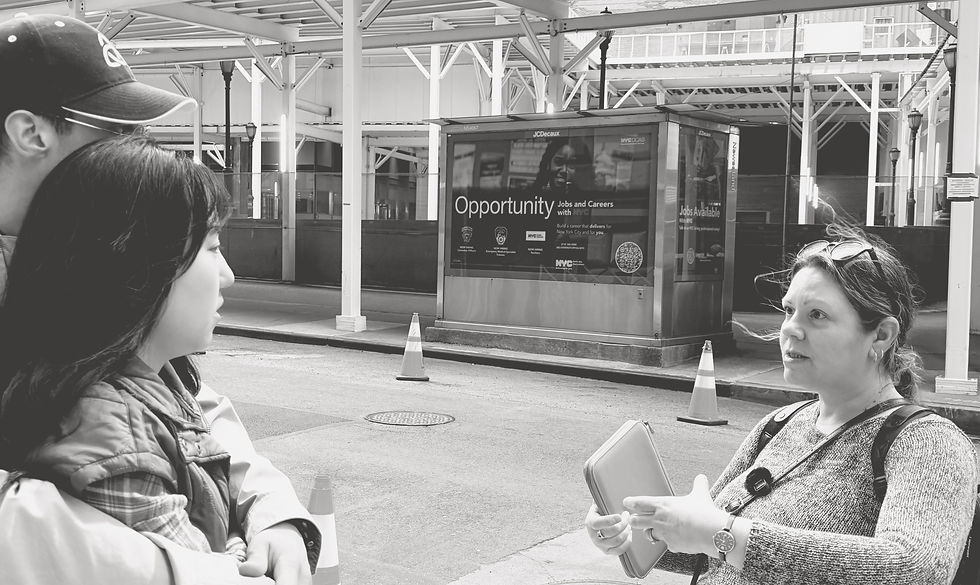
Our stop at 57 Maiden Lane required a bit of imagination, as Thomas Jefferson’s former residence plaque building is currently tucked behind construction barriers (gotta love the progress of NYC!). But no amount of scaffolding could hide the drama! We stood on the sidewalk across the street and revisited:
The Room Where It Happened: The dinner table bargain that traded the capital for a financial system, known as The Compromise of 1790, happened at that house that once stood there.
The Reynolds Pamphlet: I shared that part of the Compromise was, before the capital could be moved to the Potomac, it was temporarily relocated to Philadelphia for 10 years while they built what would become Washington D.C. The Cabinet moved to Philly as well, and that is where Hamilton ran into his personal trouble. Jefferson's invovlvement in uncovering the scandal was key to Hamilton’s decision to publish the entire account of his affair with Maria Reynolds and no financial speculation occurred. Political integrity saved, personal reputation as a good husband tarnished forever.
A Penny for His Thoughts
At Trinity Church, the air was revered, quiet, despite being on busy Broadway. We stood on the sidewalk to discuss Hamilton’s grand funeral before entering the churchyard.
Fact Check by the Grave: I also took this time to dispel the dramatic license the musical myth took that Angelica Schuyler Church and Alexander were romantically involved. (They weren't)

We paid our respects by placing a penny on Alexander’s monument and visited the resting places of Eliza, Philip, and the tailor/spy extraordinaire, Hercules Mulligan, Hamilton’s first friend in America.


As we left the graveyard, I stood by the church and honored Eliza’s incredible legacy, telling of her accomplishments and the story of 50 years of protecting Hamilton's legacy as well. If it weren't for her, his political rivals would have succeeded in forever diminishing his large contributions to our nation. She was truly a remarkable human worthy of much praise. As Hamilton's last written words to her summed up beautifully: "Best of wives, best of women."
The First Charge - Student Hamilton as a Rebel Patriot

After Trinity, we traveled down to the bottom of Broadway and took a walk by Bowling Green, NYC’s oldest park, built in 1733. It was here that crowds of rebels & patriots, after hearing a reading of the Declaration of Independence, tore down King George III's statue in 1776 and melted him down into musket balls.
After our walk-by, we arrived at Battery Park. There, at The Battery, I told the high-action story of Hamilton and his fellow students, with Hercules Mulligan and others, in 1775, stealing British cannons from the fort while under active fire from a warship in the harbor. It was a hero’s start to his military accomplishments and a foreshadowing not to underestimate his willingness to do what it took to thrive, lead, and succeed.
The Final Dinner

After a stroll down the cobblestones of historic Stone Street (the oldest preserved street in NYC), we reached our final destination: Fraunces Tavern, est. 1752.
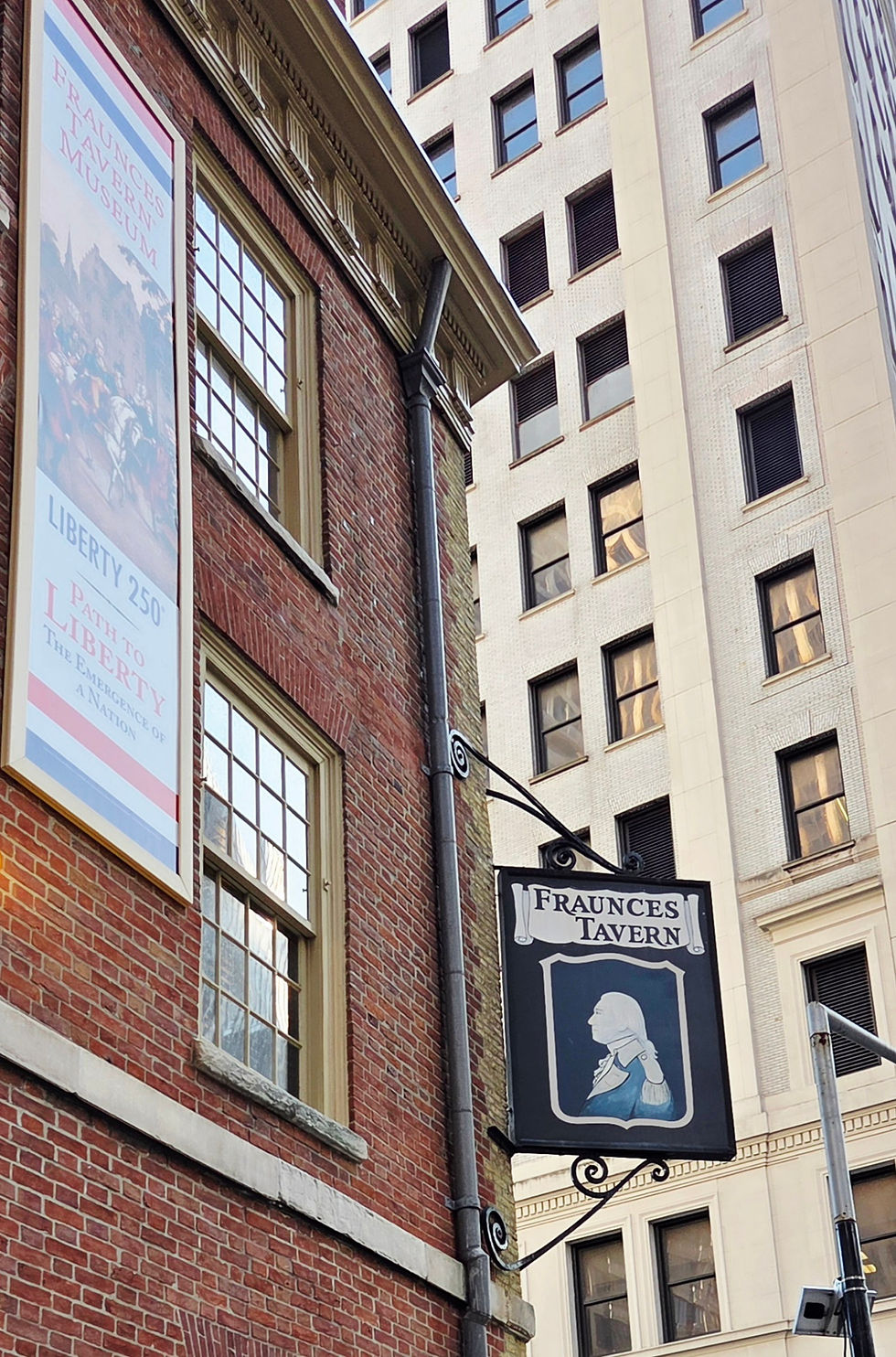
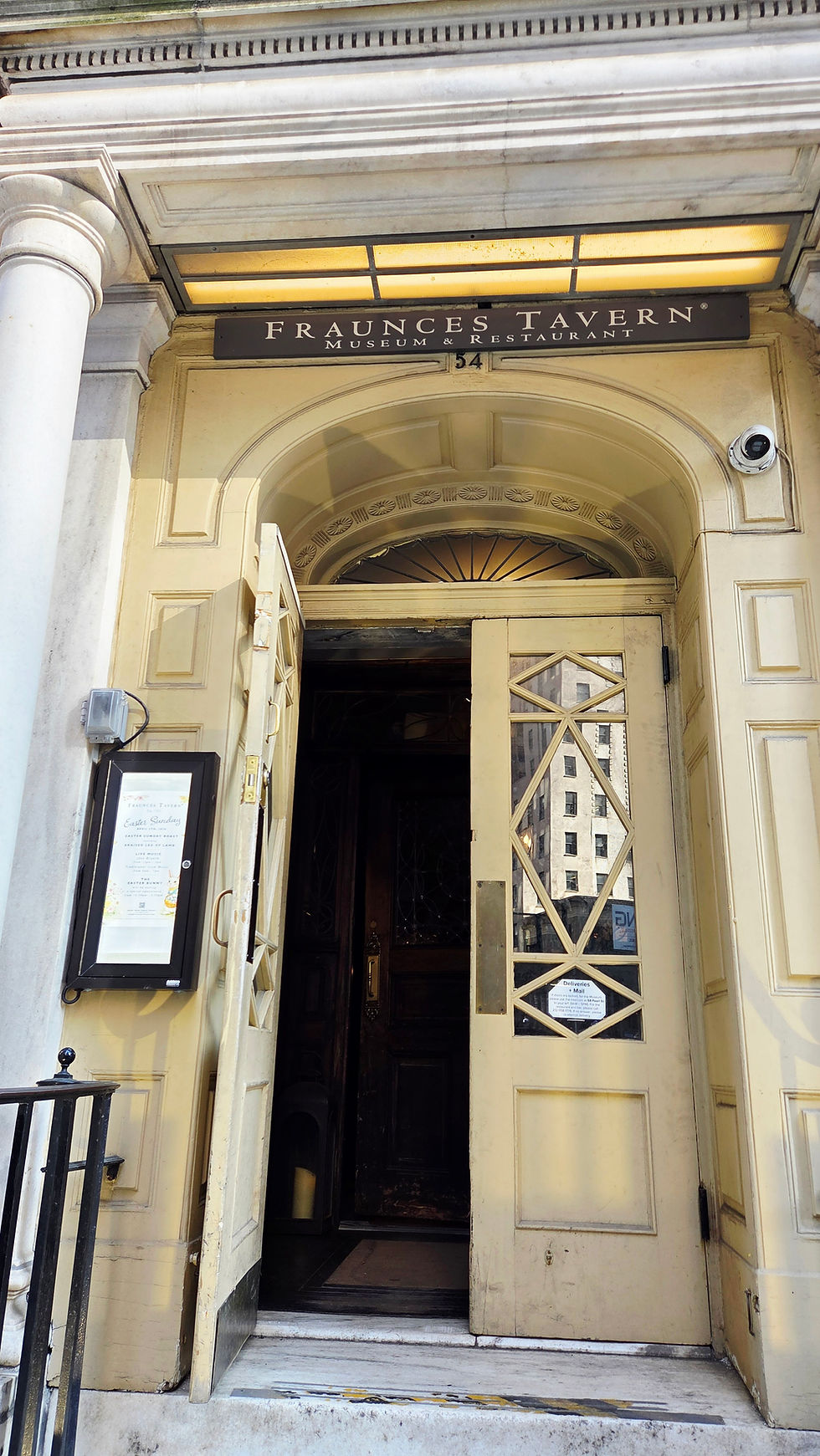
Before entering, I shared three final tales:
Washington’s tearful farewell to his officers after we won the war.
The petty revenge of tavern owner Samuel Fraunces’ son, a former clerk of Hamilton, who helped leak the Reynolds scandal.
The eerie last supper Hamilton and Burr shared with the Society of the Cincinnati, which Hamilton was president of, just a week before the duel. According to legend Hamilton hinted at one last insult during a speech while Burr sulked in a corner of the room. The next day, Burr started to plan the duel.
Fraunces Tavern had been the center of history in the founding of the country. The founding fathers of New York dined there often and George Washington even got take-out from there when working at Federal Hall a few blocks up. One can feel the weight of 250 years of souls that have passed through the rooms: eating, working, living their lives.
We enjoyed a spectacular dinner in the Tallmadge Room, named for the grandson of Benjamin Tallmadge, the mastermind of the Culper Spy Ring. (A perfect teaser for our upcoming July Spy & Shadow War Tour!)

The Verdict
The day was a triumph! Our Tag Alongs walked away with more than just sore feet. They left with a new perspective on the man behind the myth and the 10 dollar bill. They reported that they loved the time travel atmosphere and the way the stories turned history into a living, breathing experience.
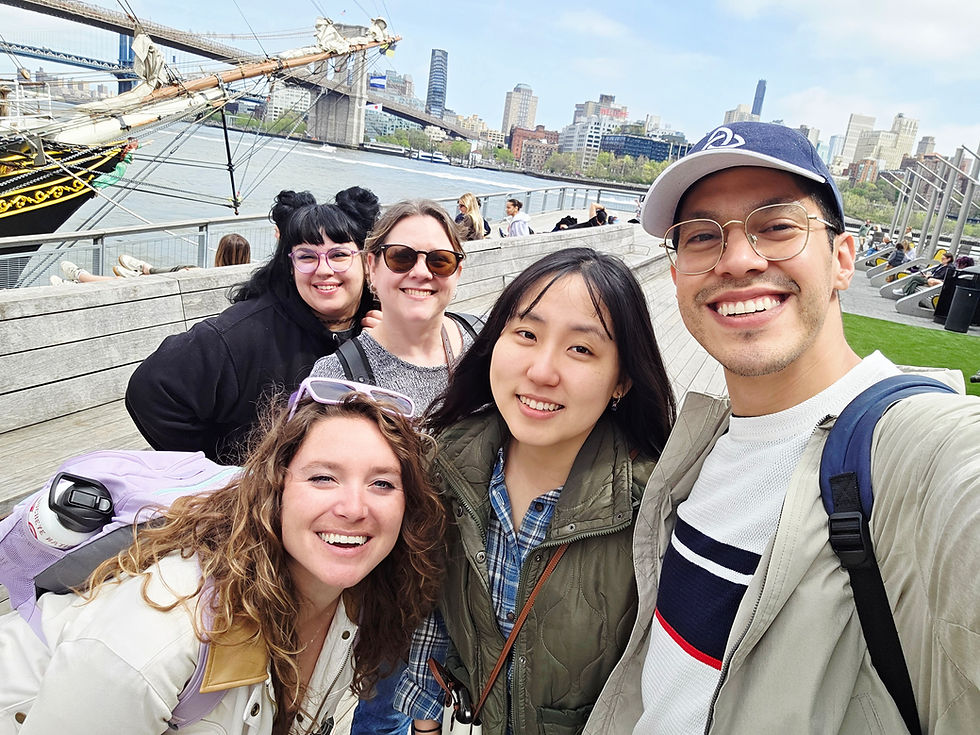
Ready to journey with us on another adventure through time? Visit our Events page for a listing of current tours set for this summer. Come along with us in the footsteps of history!
(c) 2026 Tag Along Tours East
Narrative 100% written & edited by a human; all photos are (c) Tag Along Tours East, unless otherwise noted
Comments